AI SMS follow up for leads starts with a simple fact: most leads do not answer the first call. Many of them will answer a text. That makes text follow-up the cheapest place to win back leads you already paid for, and the place most businesses do worst.
AI SMS follow-up for leads means an AI text agent replies to every new lead within seconds, answers their questions from your own information, books the appointment and keeps following up on a schedule, handing the conversation to a person when it needs one.
Here is what to automate, what to keep human, and how to make text and calls work as one follow-up instead of two disconnected bots.
What to automate
The first reply
Speed matters most in the first few minutes, and nobody on your team can reply to every lead at 9pm on a Sunday. An AI text agent can. The first text should confirm who you are, reference what they asked about, and ask one easy question.
Answers to the questions you get every day
Pricing ranges, service areas, hours, what happens next. Give the agent a knowledge base built from your own pages and documents, and it answers from that instead of improvising.
Booking, rescheduling and cancelling
The highest-value thing a text agent does is put a time on your calendar. It should check live availability, offer real slots in the lead's timezone, and book, reschedule or cancel without a human in the loop.
Collecting the basics
Name, email and the one or two details your team needs before the appointment. Ask for them in the conversation, not in a form the lead has to fill out again.
The follow-up sequence
Leads who go quiet should get a follow-up, then another, spaced out and sent inside sensible hours. A text agent that schedules its own follow-ups inside active hours does this without a separate drip campaign.
What not to automate
- Negotiation and exceptions. Discounts, custom terms and "can you make an exception" belong to a person.
- Upset customers. When the tone turns, hand off. The agent should pause the moment a human takes over the thread.
- Anything the agent has no source for. If the answer is not in your knowledge base, the right reply is "let me get someone to confirm that", not a guess.
Make text and calls one follow-up
The weak spot in most setups is that the texting tool and the calling tool do not know about each other. The lead texts that they are busy until Thursday, and the dialer calls them on Tuesday anyway.
One rep across text and voice

New lead
Form, funnel or Facebook lead

AI text agent replies
Answers, qualifies, books
Lead texts "call me"
The text agent hands off

AI voice agent calls
Already knows the text thread
In StrideOps, the AI text agent (Conversation AI) handles the follow-up above: it replies from its prompt and your knowledge base, books, cancels and reschedules appointments, collects name and email, tags contacts, triggers workflows and schedules follow-ups inside active hours. It pauses when a person takes over, and it stays quiet while a workflow is waiting on the lead.
Two things make it one rep instead of two bots:
- Text-to-call. A lead can text "call me" and the AI voice agent calls them with the text thread already in context. This works on Twilio numbers.
- Shared memory. Turn it on and your voice and text agents remember every conversation with a lead, so nobody asks the same question twice. It is off by default, set per channel, and individual contacts can be excluded.
If you want the call to come first and the text to follow, that works too: see how to call Facebook leads automatically.
A follow-up sequence that does not annoy people
An example for a new lead who has not booked:
| When | Message |
|---|---|
| Within a minute | "Hi [name], thanks for reaching out to [business] about [service]. Do you have a minute for two quick questions?" |
| Next day, if no reply | "Hi [name], just checking you saw this. Happy to answer anything about [service], or I can book a time to talk." |
| Day 3 | "Would [day] at [time] or [day] at [time] work for a quick call?" |
| Day 7 | "Last check from me for now. If [service] is still on your list, reply anytime and I'll pick it up." |
Four messages in a week, each shorter than the last, all inside active hours, and the sequence stops the moment they reply or book.
Example: a lead with a question
Lead: How much does it usually cost?
AI text agent: Most jobs like yours run between [range]; we confirm the exact price after a quick look. Want me to book that? I have Thursday at 9 or Friday at 2.
Lead: Friday.
AI text agent: Booked for Friday at 2. You'll get a reminder the day before.
The answer came from the knowledge base, the price was a range, and the conversation ended in a booking.
Before you switch it on
- Register for business texting. In the US, carriers require A2P 10DLC registration for business texting from regular 10-digit numbers. Unregistered traffic gets filtered or blocked.
- Get consent. Your forms should say you will text and call, and opt-outs ("STOP") must be honored. Check the rules for your region; this is not legal advice.
- Read the first fifty conversations. Every text lands in the contact's conversation history. Read them, tighten the knowledge base, and adjust the agent's prompt before you scale.
FAQ
How do you use AI to follow up with leads?
Connect your lead sources to an AI text agent that replies within seconds, answers from your knowledge base, books appointments and schedules follow-ups inside set hours, with a person taking over for exceptions.
What is a good follow-up text message for a new lead?
A good first follow-up text names your business, references what the lead asked about and ends with one easy question, such as offering two appointment times. Keep it short and personal.
Is AI texting allowed for business leads?
Business texting is allowed with consent and proper registration. In the US that means A2P 10DLC registration for 10-digit numbers and honoring opt-outs. Check the rules for your region.
Should AI follow-up be text or calls?
Both, working together. Text reaches leads who will not pick up; a call converts faster when the lead is ready. The best setup lets a lead move from text to a call without repeating themselves.
How many follow-up texts should you send a lead?
Three to five over a week or two is a common range. Space them out, keep each one shorter than the last, and stop as soon as they reply, book or opt out.
Should AI text follow-up stop when a person replies?
Yes. When a person on your team takes over the conversation, the agent should pause, so the lead never gets two different answers at once.
The bottom line
AI text follow-up wins back leads you already paid for, as long as it answers from your information, books real times and hands off cleanly. Make it one rep with your calls, not a second bot, and it stops feeling like automation to the lead at all. See how shared memory and speed to lead work in StrideOps.
Text every lead back in seconds
An AI text agent that answers, books and follows up, and a voice agent that calls when the lead asks, with one shared memory.
About the author
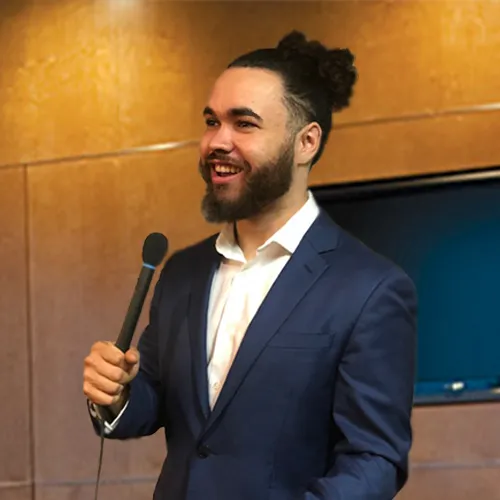
Josh Pocock
Founder & CEO, StrideOps.ai
Josh Pocock is the founder and CEO of StrideOps.ai. He spent eight years building sales and marketing companies - most recently Executive Stride, the AI appointment-setting agency that now runs end to end on StrideOps.ai as customer zero. He went all-in on the platform full-time in late 2025.
Josh Pocock is the founder and CEO of StrideOps.ai. He scaled his own AI agency past $50K a month, and his agency Executive Stride has built systems for 400+ businesses. StrideOps started as the platform he built to replace that stack.
Read more
How to Qualify Leads With AI on the First Call or Text
How to qualify leads with AI: define what qualified means, turn it into a few questions, let an AI ask them by call or text, and route every answer.
How to Call Facebook Leads Automatically in Under a Minute
Call Facebook leads automatically in under a minute: connect your Page, map lead forms and build one workflow that has an AI agent call every new lead.
Speed to Lead: Why the First Minutes Decide the Deal
Speed to lead is how fast you reach a new lead after they raise their hand. What the research says, why human teams miss the window and how AI closes it.